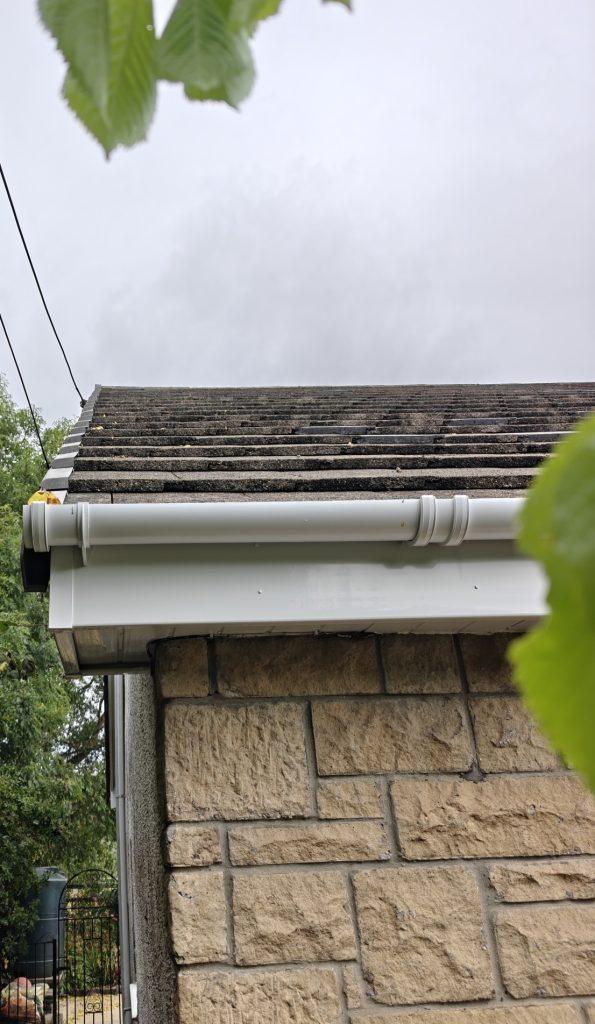
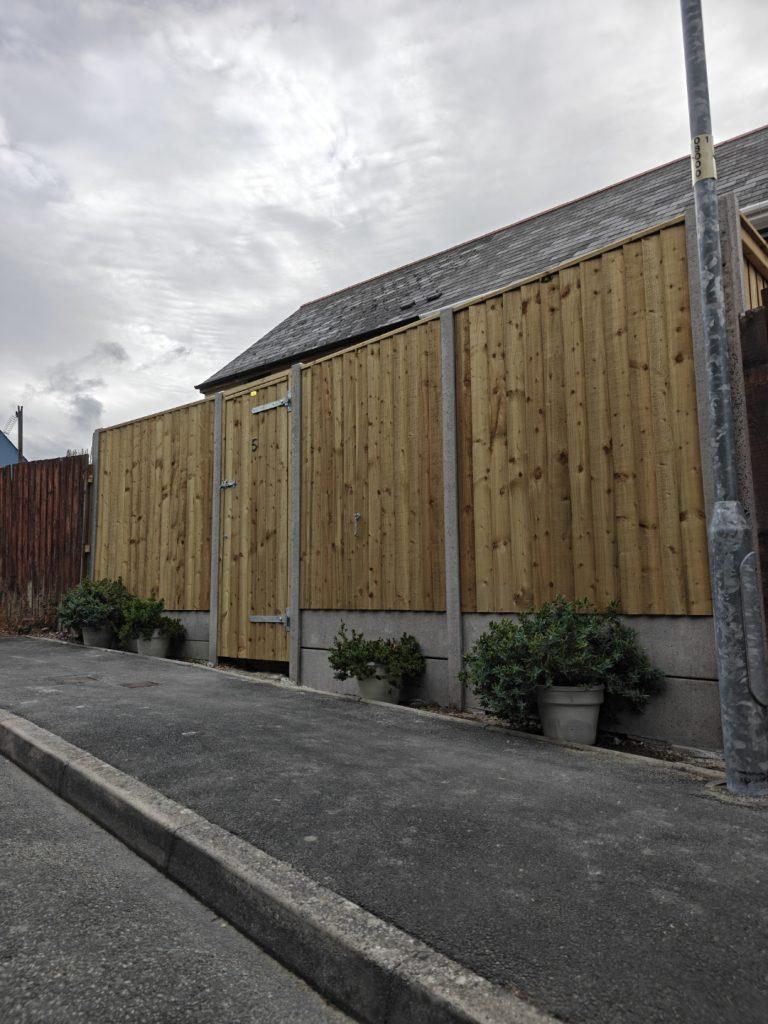
Roof damage caused by high winds can quickly become a serious concern, particularly when an older building has traditional construction methods and materials. Late last year, during a period of dry weather, we completed a roofing repair to a property where a section of the roof had been lifted during a storm.
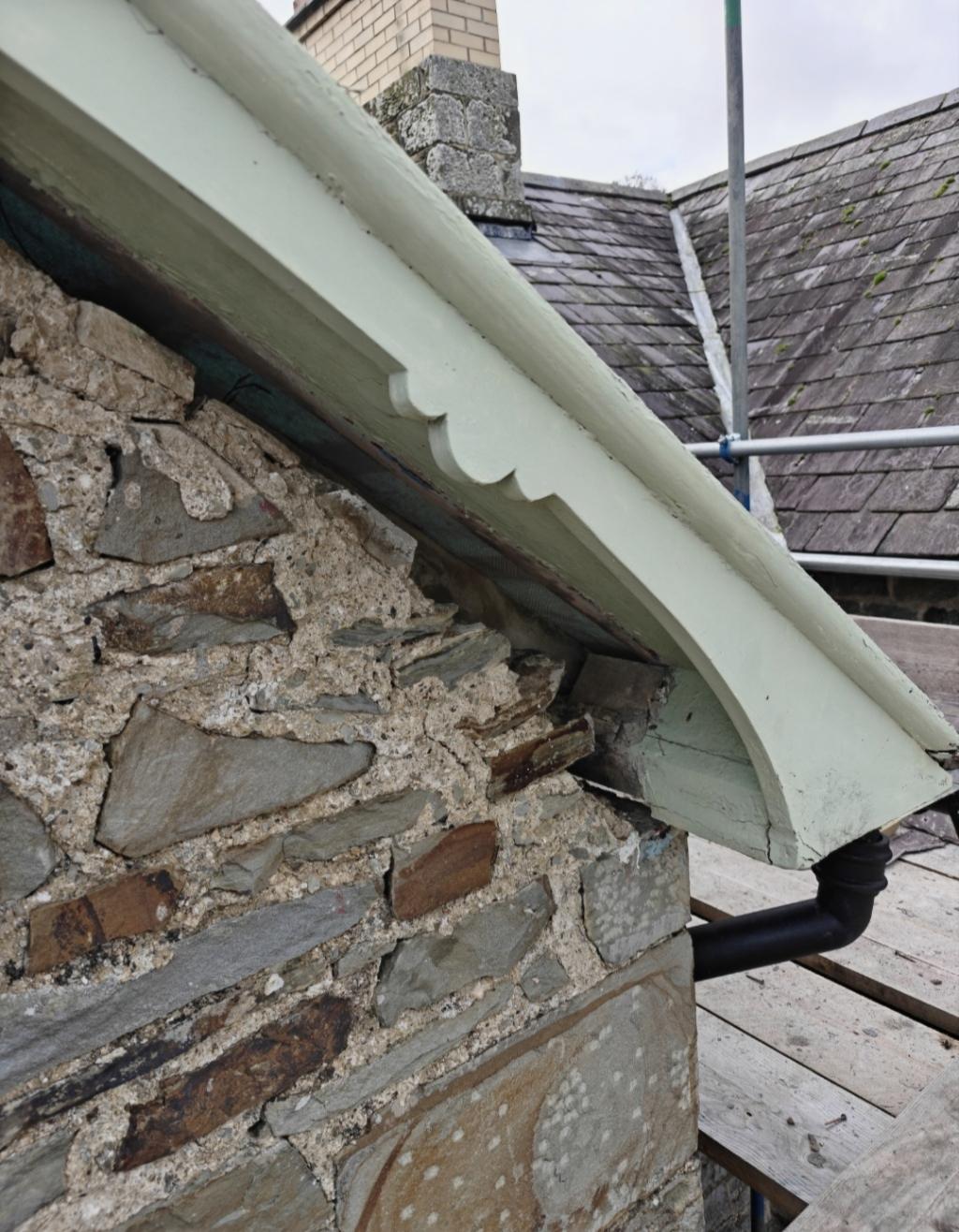
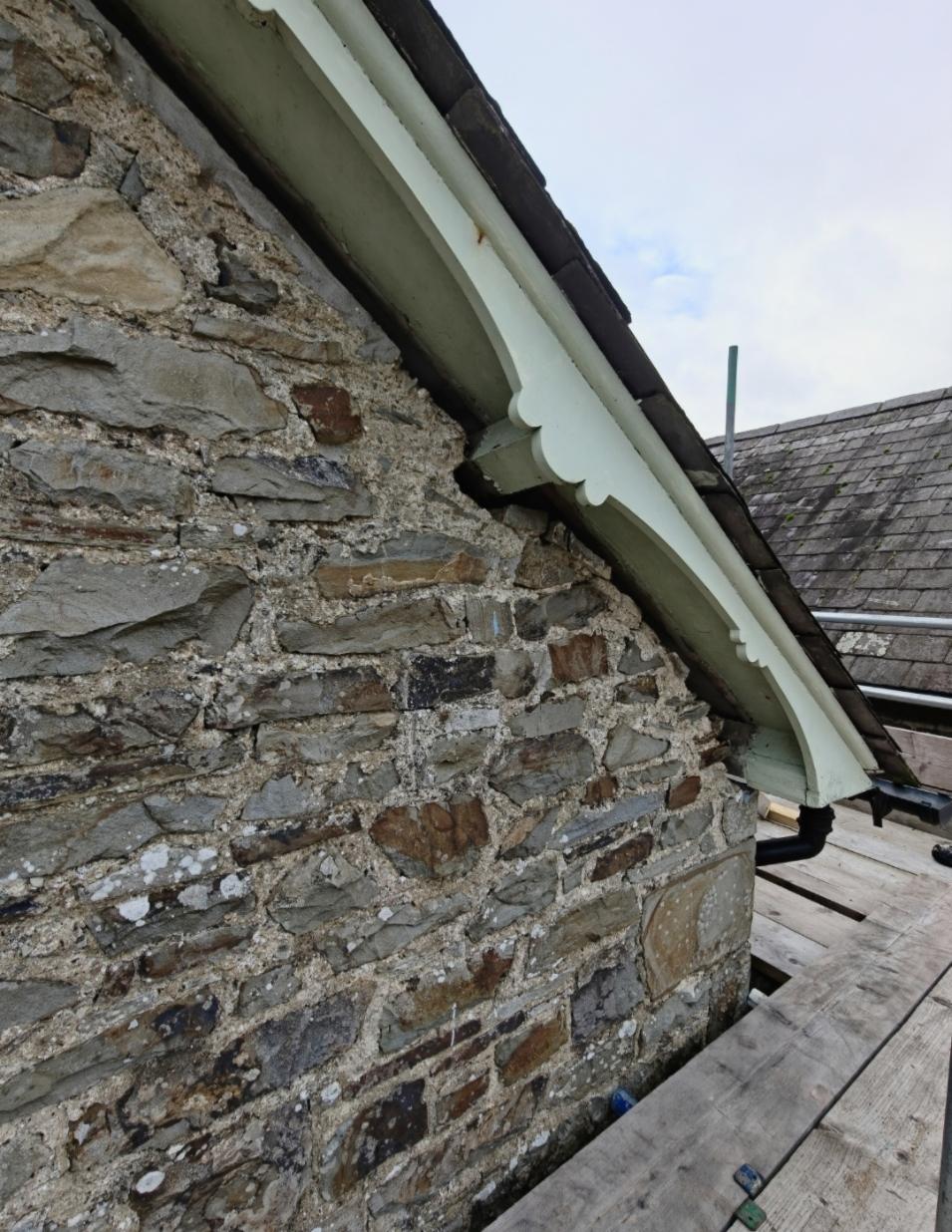
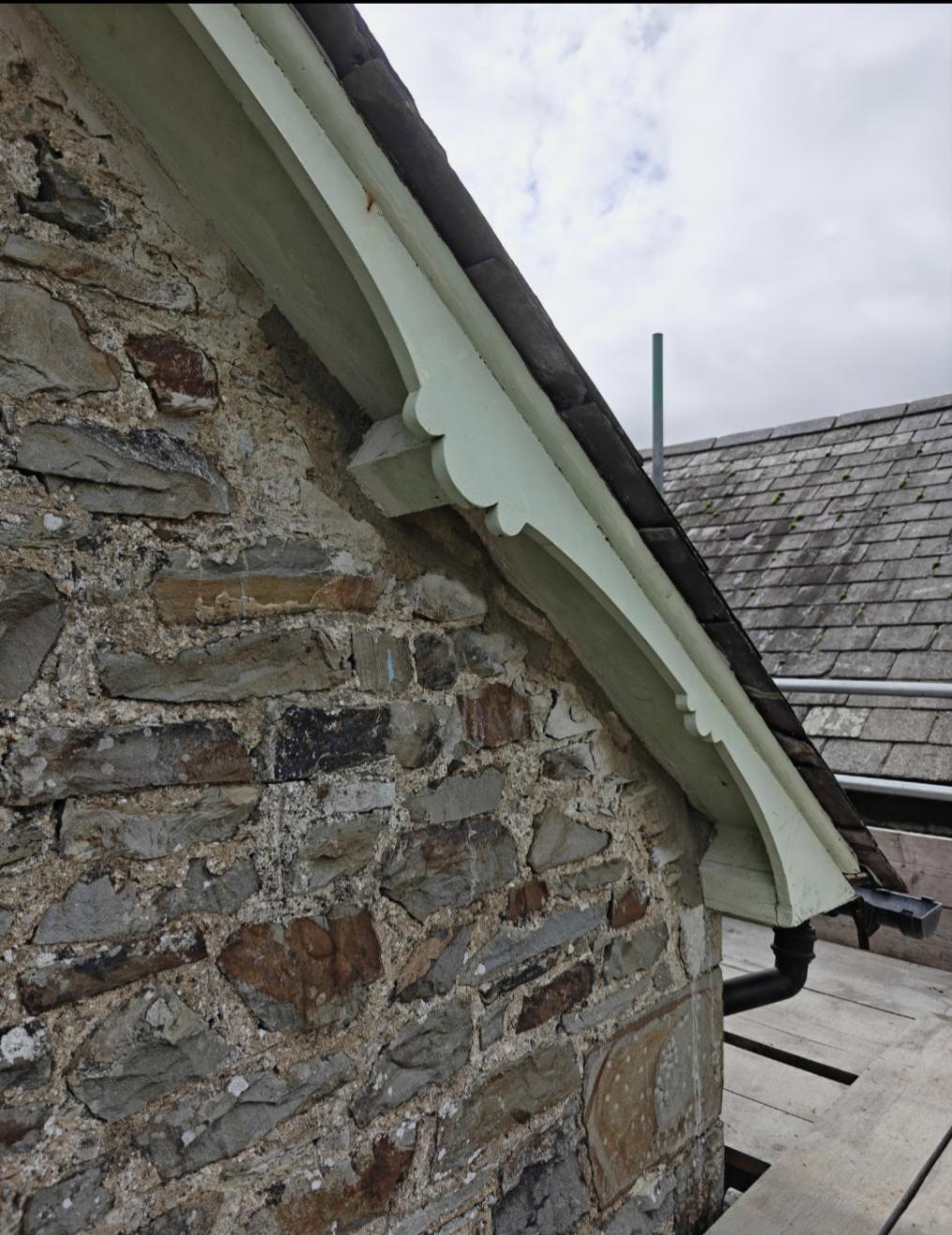
The damage was visible in the condition of the roof before work began, with the affected section having moved away from the supporting walls. After investigating the cause, it became clear that several issues had contributed to the failure, including the absence of appropriate wall tie straps and the deterioration of the traditional lime mortar supporting the roof.
The roof had been lifted by strong winds because there were no wall tie straps in place to adequately secure the roof structure to the walls. These straps are an important part of securing a roof against wind uplift, particularly during severe weather.
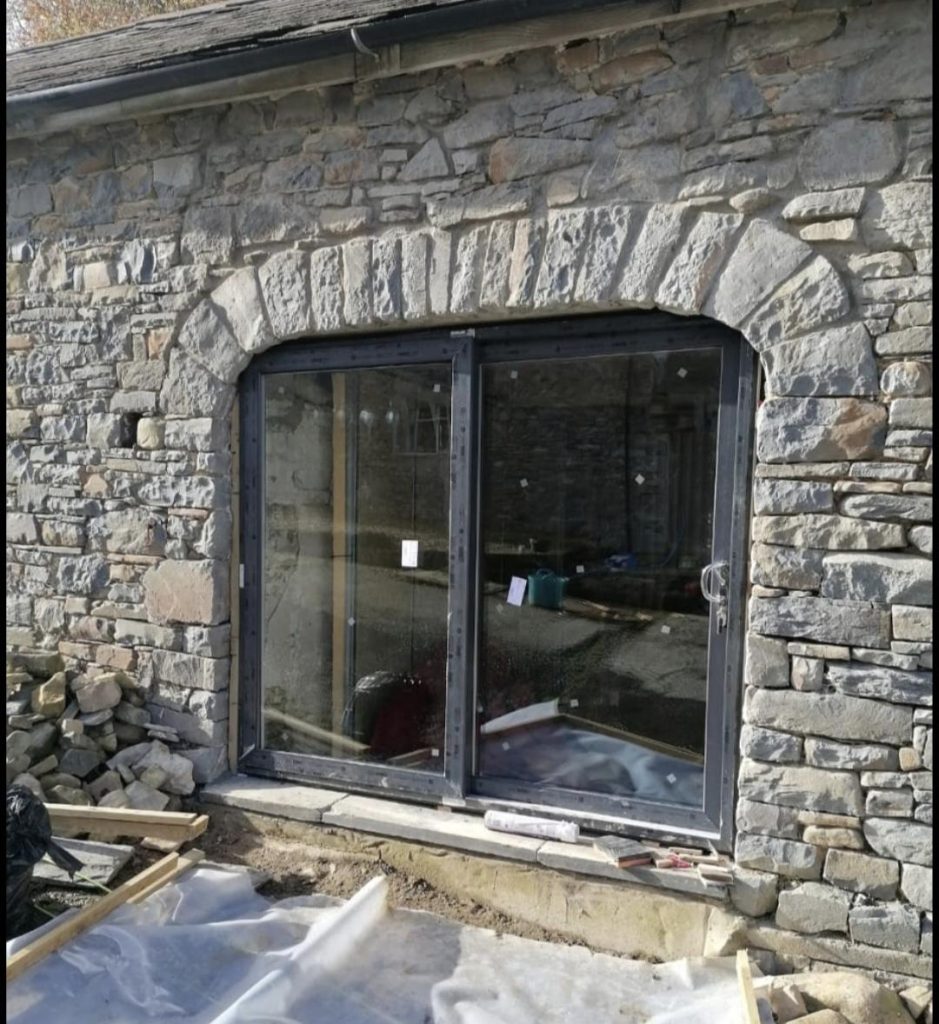
The building had also been constructed using traditional methods with lime mortar. Over a long period, the lime mortar had deteriorated significantly and had broken down to a powder-like consistency.
The combination of deteriorated mortar and insufficient roof restraint eventually meant the roof was no longer adequately supported by the walls. During the storm, the high winds were able to exploit this weakness, causing the affected section of the roof to lift.
Understanding why a roof has failed is an important part of carrying out a lasting repair. Simply replacing damaged materials without addressing the underlying cause could leave the property vulnerable to similar problems in the future.
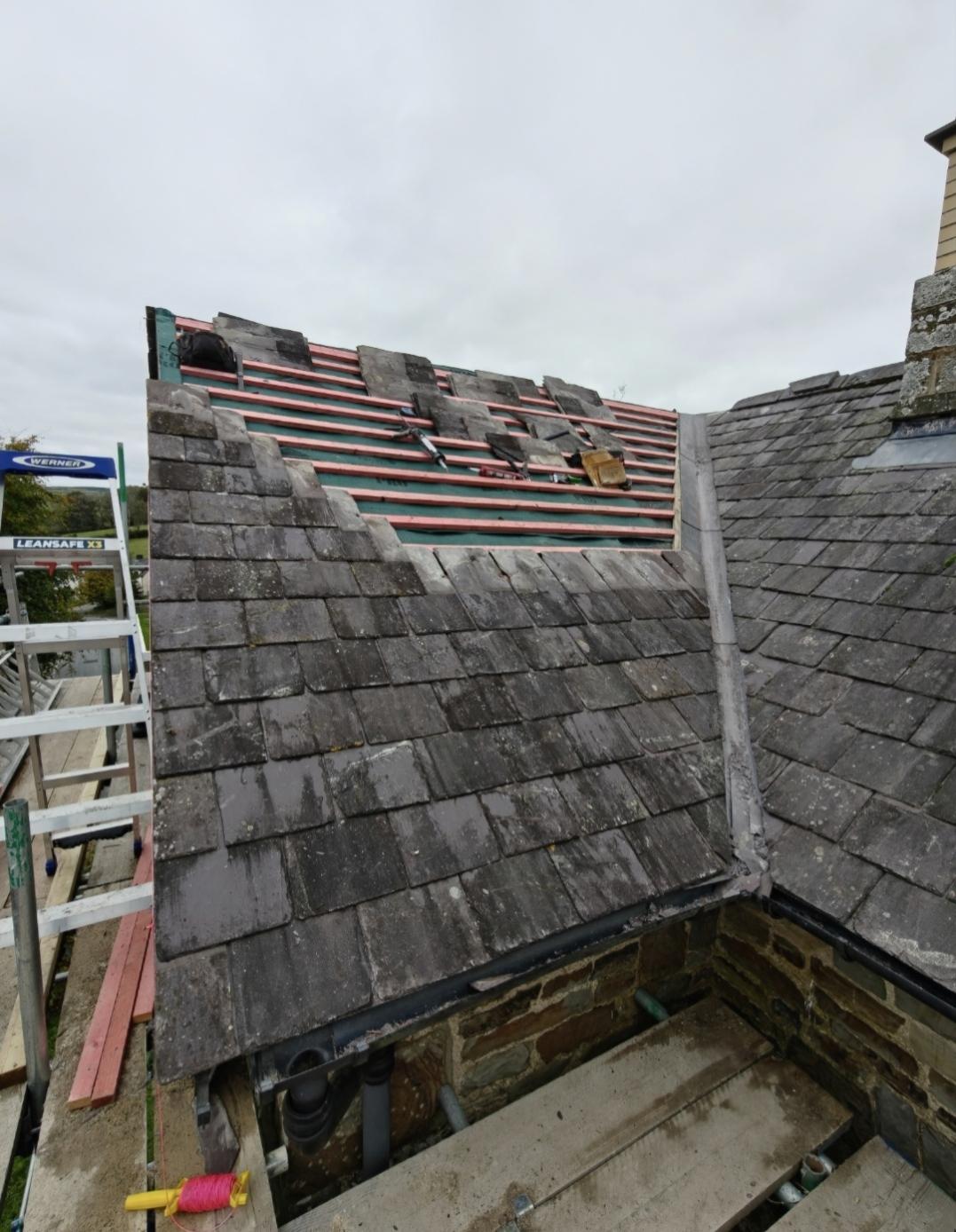
To carry out the repair properly, all of the Welsh slates were carefully removed from the affected section of the roof.
Removing the slates provided access to the underlying roof structure and allowed the necessary repairs to be completed. Where traditional roofing materials are involved, careful handling is particularly important to avoid unnecessary damage to materials that may be suitable for reuse.
Once the affected area had been opened up, the roof could be carefully repositioned and secured back onto the supporting walls.
The roof was pulled back down into the correct position before additional timberwork and wall straps were installed where required.
The new straps provide an important connection between the roof structure and the supporting walls, helping secure the roof against future movement caused by strong winds.
Addressing the structural issue in this way provided a more secure foundation for reinstating the roof covering and helped ensure that the underlying problem was dealt with rather than simply repairing the visible damage.
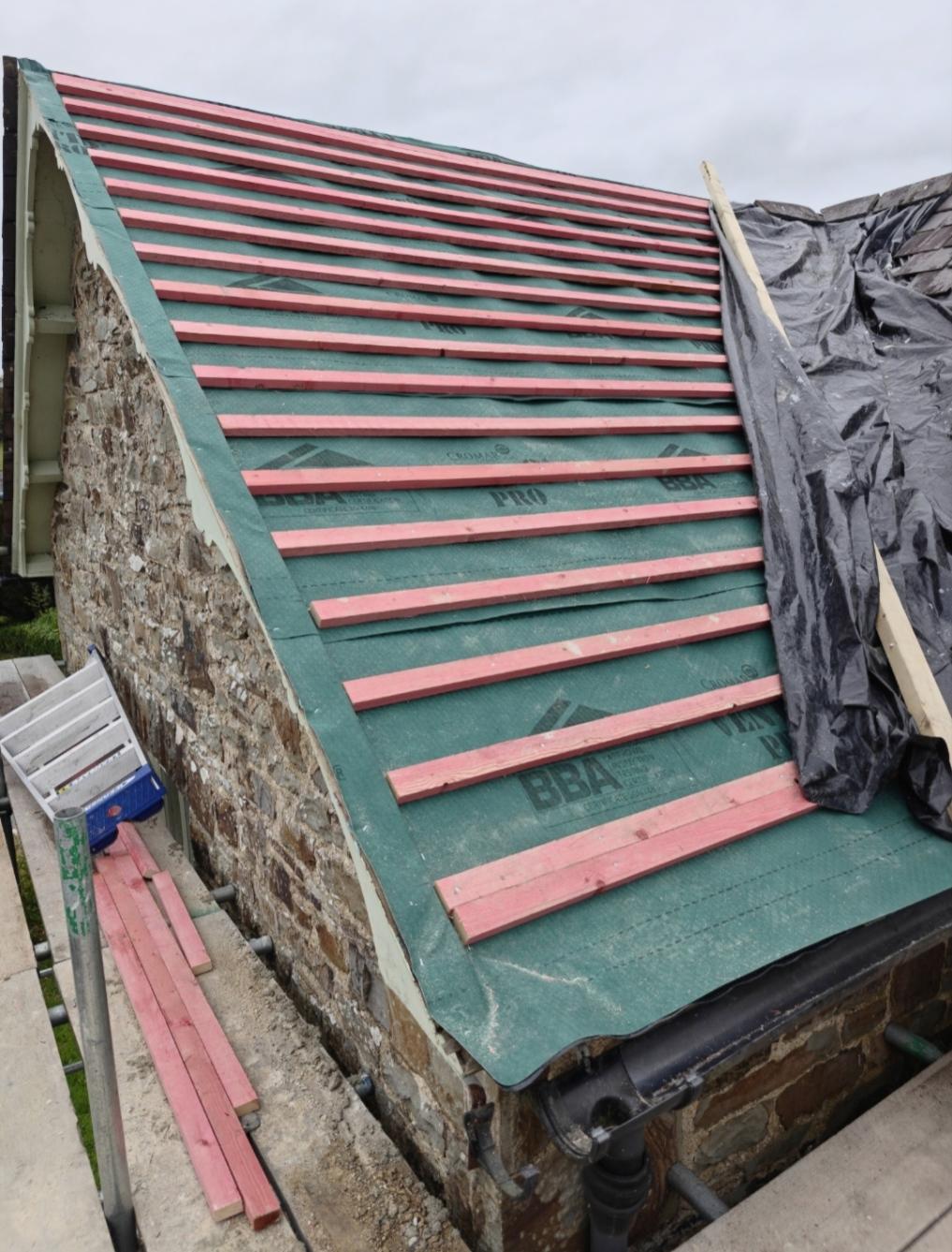
Once the roof had been correctly positioned and strengthened, new roofing felt and battens were installed to provide a suitable base for the Welsh slate roof covering.
Replacing these components as part of the repair helped ensure the affected section of the roof was rebuilt using sound materials rather than simply reinstating the existing layers.
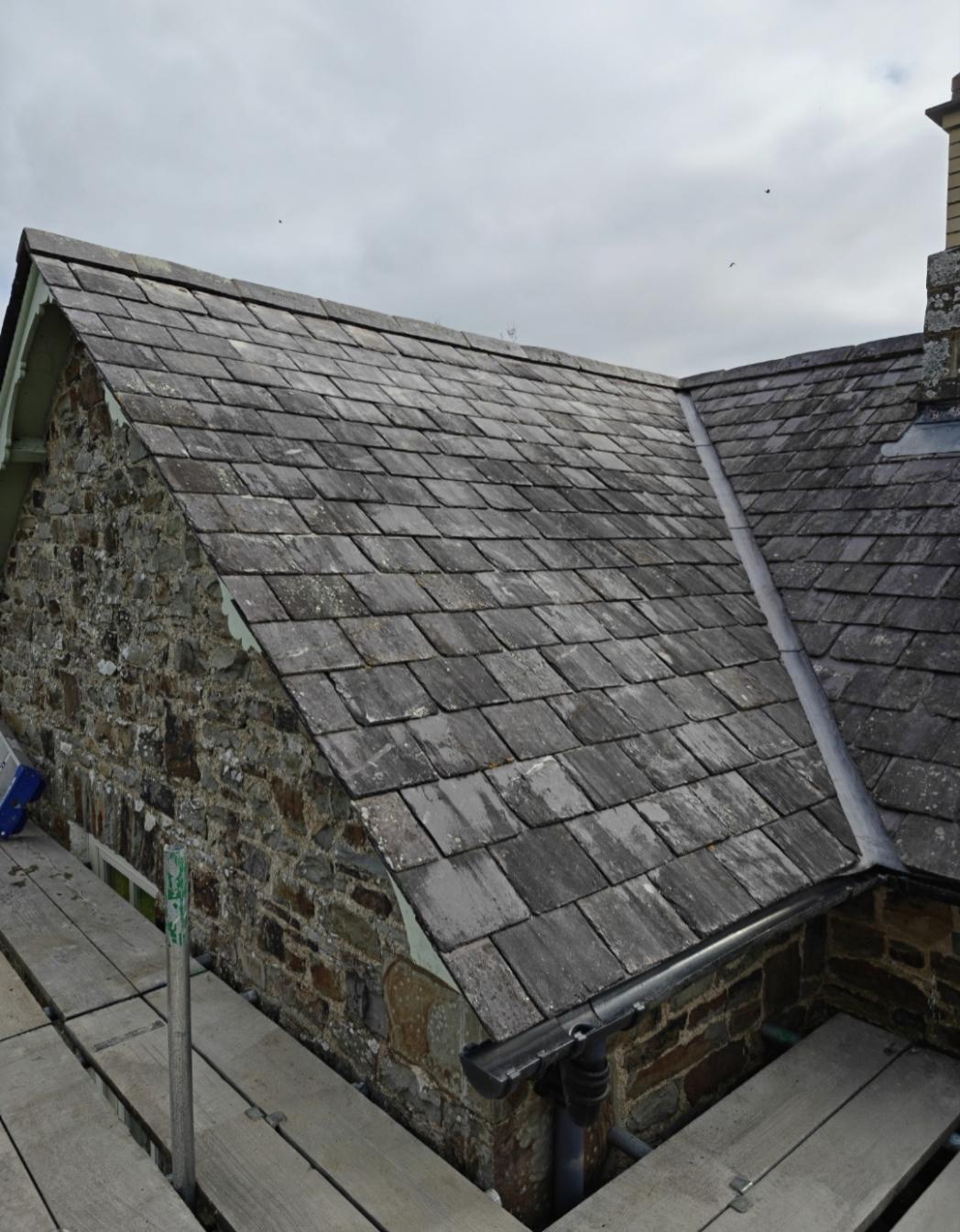
The Welsh slates were then carefully reinstalled, retaining the traditional appearance of the building while completing the necessary repair work.
While the roof was opened up, we also identified an issue with the existing lead valley. The previous lead had been installed in excessively long lengths and was showing signs of wear.
The opportunity was taken to replace the existing valley with new leadwork installed correctly. Lead valleys are an important part of a roof’s weatherproofing, directing rainwater safely through the junction between roof slopes.
Correct installation is particularly important when working on traditional roofs, where durability, weather resistance and compatibility with the existing construction all need to be considered.
This project required more than simply replacing a few damaged slates. The underlying causes of the roof movement had to be identified and addressed, including the lack of wall tie straps and the deterioration of the traditional lime mortar.
By carefully removing and reinstating the Welsh slates, securing the roof with new timbers and wall straps, replacing the roofing felt and battens, and installing a new lead valley, the affected section was restored while retaining the traditional character of the building.
If your roof has suffered storm damage, slipped slates, movement or deterioration, it is important to investigate the underlying cause before carrying out repairs.
Contact us today to discuss your roofing requirements and arrange an assessment of your roof. We can help identify the cause of the problem and provide a professional repair solution designed to protect your property for the future.